
Why caring for the dead and the Earth are inseparable

Before I ever cared for the dead, I cared about the Earth.
I studied environmental science as an undergrad because I was drawn to systems. To how water moves through land. To how nothing exists in isolation. I learned early that every action has downstream consequences, even when we cannot see them right away.
Funeral service came later. Unexpectedly. And at first, it felt separate from everything I had studied.
Truth is; it wasn’t.
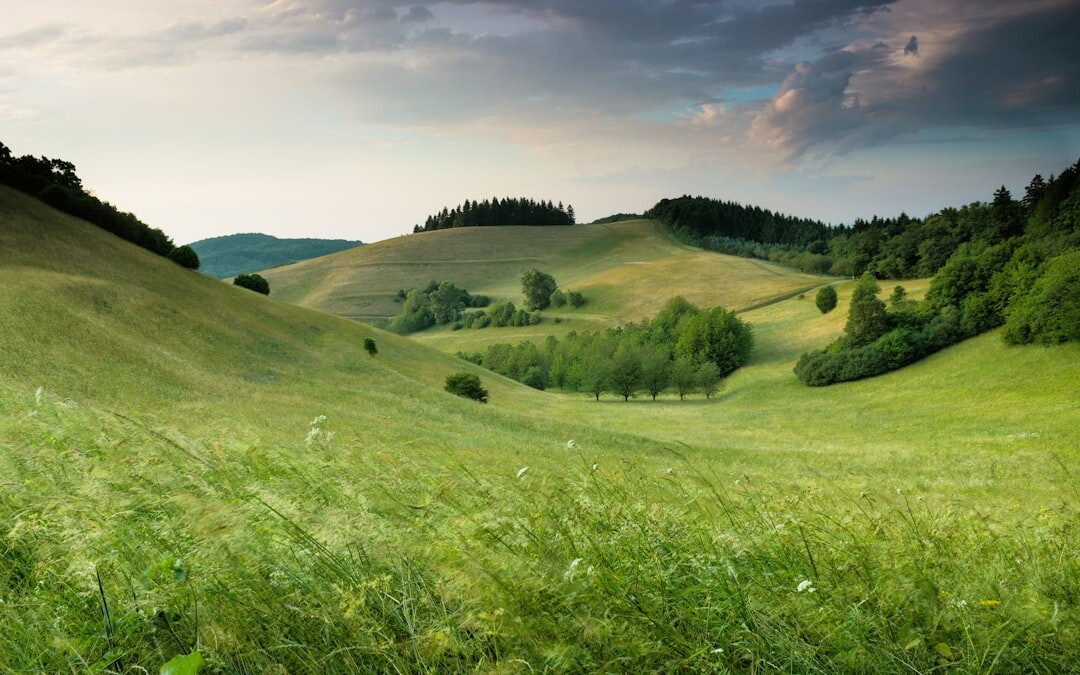
Photo by Claudio Testa on Unsplash
The longer I’ve worked with the dead, the clearer it becomes that deathcare is an ecological practice whether we acknowledge it or not. Bodies are not exempt from natural systems. Grief is not disconnected from land. Caring for the dead and caring for the Earth are part of the same responsibility. Through hands that learned the weight of the human form when it is no longer animated by breath. Through the quiet hours after families leave, when the room changes and the work becomes slower, more intimate. Through the realization that death is not abstract when it is quite literally in your care.
I learned early that grief does not live only in tears or words. It lives in posture. In breath. In the way someone hesitates before signing a form or touches their loved one in a casket as if they might still be warm. Grief lives in the body first, and the body, whether we acknowledge it or not, belongs to the Earth.
That truth changes how I see death.
And once you see it, you cannot unsee it.
The first rupture
There is a moment many funeral directors remember clearly. The moment when death stops being theoretical.
For me, it was not dramatic. It was quiet. A transfer completed. A door closed. A body resting still, no longer responsive to time or urgency. I remember thinking how strange it was that this person had spent decades occupying space in the world, and now the world had no idea they were gone.
The Earth did not pause. The weather did not change. The systems continued uninterrupted.
And yet, something had shifted.
That moment planted a question I did not yet have language for. Where does this person go now? Not spiritually, but physically. Relationally. Ecologically.
We have answers for the paperwork. For the logistics. For the industry standards.
But those answers often avoid the deeper truth. That death is not a problem to be solved. It is a process to be witnessed.
Grief is not separate from the land
We talk about grief as if it is purely emotional. Something happening inside the mind. Something that can be processed in isolation.
But grief is physical. Anyone who has lost someone knows this. The heaviness in the chest. The exhaustion. The way the body forgets how to do ordinary things.
Grief changes how we move through the world. And the world, especially the natural world, responds to us whether we are paying attention or not.
When I began paying closer attention, I noticed how often grief sought the Earth instinctively. People going for long walks. Sitting by water. Touching trees. Standing barefoot on grass without realizing why.
We do this because the nervous system recognizes something ancient. The Earth has always held grief. Long before therapy models or bereavement leave policies, people grieved in relationship with land.
We buried our dead close. We marked places with stones, trees, stories. We returned to those places over seasons and years. Grief unfolded alongside growth, decay, weather, and time.
Modern deathcare interrupts that relationship.
What we hide, we fear
The more death became professionalized, the more it was removed from daily life. Bodies disappeared quickly. Preparation happened behind closed doors. Cemeteries moved to the edges of towns. Language softened until it barely referenced reality at all.
We told ourselves this was progress. But fear grew alongside convenience.
People became afraid of decay. Afraid of bodies changing. Afraid of saying the wrong thing, doing the wrong thing, feeling too much for too long.
In my work, I have seen how deeply this fear affects families. They arrive already anxious, already unsure, already bracing for something they cannot name. Not just the loss, but the disorientation.
When death is hidden, grief has no map.
When nature does the teaching
I have stood at gravesides where the wind moved through trees so gently it felt intentional. I have watched families soften when soil returned to earth without machinery roaring nearby. I have seen children ask honest questions when death was presented plainly rather than sanitized.
These moments do not erase grief. They contextualize it. Nature does not rush death. It does not apologize for it. It integrates it.
When families choose burial practices that allow the body to return to the earth without barriers, something subtle but profound happens. Death becomes less adversarial. Grief becomes less isolating.
People often tell me they feel calmer, though they cannot explain why. The explanation is simple. Their bodies recognize the rhythm.
Ecology is grief literacy
Ecology teaches us how systems survive loss.
Forests do not panic when a tree falls. They reorganize. They adapt. They use what remains. This does not mean the loss is insignificant. It means the loss is meaningful enough to be integrated.
Grief asks us to do the same.
When we deny decay, when we attempt to preserve bodies indefinitely, when we promise permanence where none exists, we send mixed messages to the grieving psyche. We say this is final, but also frozen. Gone, but unchanged.
That contradiction makes grief harder.
Ecological deathcare, by contrast, tells the truth gently. This body will change. The relationship will change. The love does not disappear, but it will not look the same.
Truth, offered with care, is regulating.
Speed as a form of violence
This mirrors how we treat the Earth.
Clear the land quickly. Extract resources efficiently. Move on before consequences surface.
But both grief and ecology punish speed.
Unprocessed grief shows up later. In bodies. In relationships. In burnout. In illness.
Environmental damage does the same.
Slowing down is not indulgent. It is necessary.
When deathcare slows, people breathe differently. They ask better questions. They feel more agency. Grief has space to unfold rather than explode.
The land remembers
Trees grow. Paths shift. Seasons layer memory upon memory.
I have watched families return year after year, noticing small changes. A sapling taller than last time. A new bird species. A familiar bench worn smooth.
The land becomes part of the relationship.
This matters because grief is not something we “get over.” It is something we live alongside.
A living landscape reflects that truth better than polished stone ever could.
Being shaped by the work
I’ve always noticed soil quality. I thought about water tables. I pay more attention to how land is used, preserved, or abused. Because I understand, in a way I did not before, that bodies do not disappear. They go somewhere.
Caring for the dead made me more protective of the Earth, not less.
It taught me humility. It taught me restraint. It taught me that not everything needs to be fixed or improved. Some things need to be allowed.
The shared work of tending
To care for the dead is to tend a transition. To care for the Earth is the same. Both require patience. Both require listening. Both require acknowledging limits.
We cannot control grief any more than we can control ecosystems. We can only create conditions that support healthy adaptation.
That is the work.
Not mastery. Not domination. Stewardship.
Where this leaves us
This is not about convincing everyone to choose one kind of burial or one way of grieving. It is about remembering what we forgot.
That death is not separate from life.
That grief is not separate from the body.
That the body is not separate from the Earth.
When we align deathcare with ecological truth, we do more than reduce harm. We restore coherence. We allow grief to be held by something larger than ourselves. And in that holding, something softens. Something steadies. Something remembers how to belong.
That is where ecology and grief meet.
Not in theory.
In the ground.
In the body.
In the slow, honest work of returning what was always borrowed.
Marc D Malamud
Transitioning Doula