
The Environmental Cost of Death Care

The funeral industry has a waste problem, and it is far bigger than most people realize. For a profession rooted in care, dignity, and community responsibility, we generate an astonishing amount of trash, chemical waste, and single-use consumption in the course of serving families. Much of this waste never enters the public eye, because families are rarely exposed to the operational back rooms where the work is done. They see the arrangement conference, the chapel, the service, and the polished professionalism. What they do not see is the volume of waste created in the name of cleanliness, safety, efficiency, and liability control.
The uncomfortable reality is that modern funeral service often treats death as something disposable, and the methods we use to manage risk, control odor, manage trauma, and create “sanitary” conditions frequently rely on materials and practices that are neither sustainable nor environmentally neutral. While parts of this are genuinely rooted in public health and infection control, the industry also hides behind those rationales to excuse systems that are driven by habit, convenience, and outdated operational norms. If we claim we are in the business of ethical care, we cannot ignore the environmental cost of our practices simply because the waste happens behind closed doors.
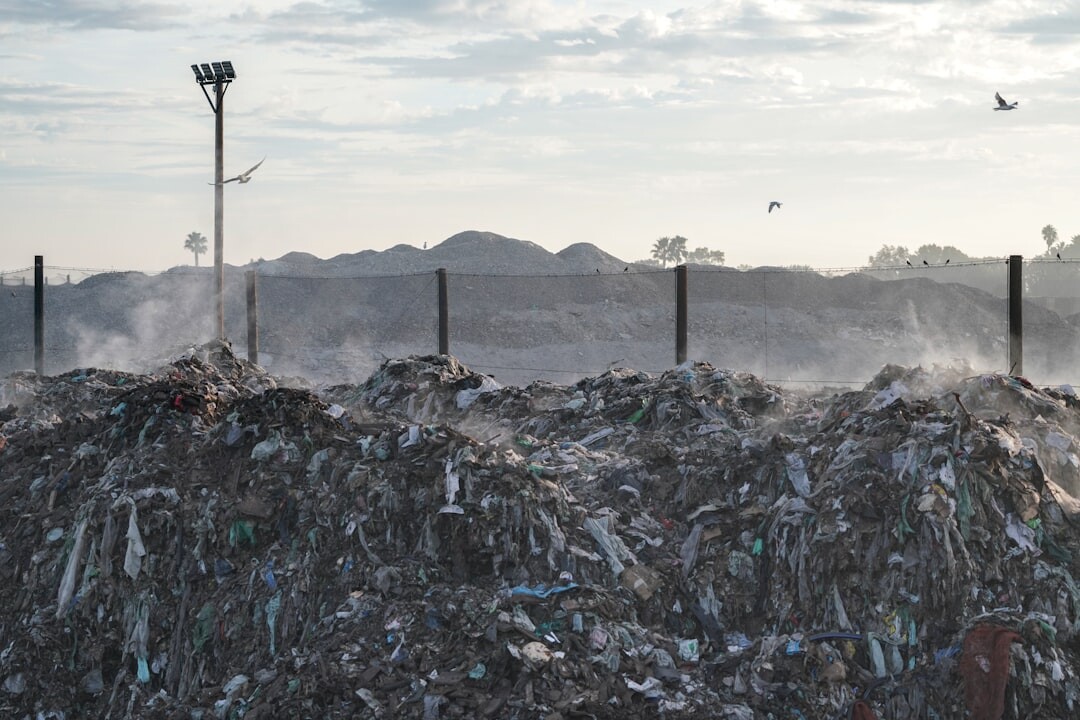
Photo by Katie Rodriguez on Unsplash
One of the most visible contributors to this problem is the enormous reliance on single-use plastics and personal protective equipment. Gloves, masks, gowns, sleeves, shoe covers, disposable aprons, and plastic sheets are used constantly, and often in quantities that would shock anyone outside the field. There are clear situations in which PPE is necessary and non-negotiable, particularly when dealing with trauma, infectious disease risk, or high fluid exposure. However, it is also true that many funeral homes have shifted toward a default of maximum PPE for nearly every touch point, including situations where proper hand hygiene, risk assessment, and washable barrier systems could reduce waste without compromising safety. In many operations, disposable gloves become a reflex rather than a measured decision, and once that culture takes hold, waste becomes inevitable.
Linens and textiles represent another major waste stream that does not receive enough scrutiny. Some firms still rely on washable sheets, towels, and cloths, but many operations, especially high-volume cremation providers and corporate locations have moved toward disposable alternatives. Even washable linens frequently get discarded after traumatic cases, not necessarily because regulations demand it, but because staff are overwhelmed and the labor of processing, disinfecting, and laundering becomes too heavy to manage. The problem is not that funeral professionals do not care; the problem is that the industry runs chronically understaffed, and under those conditions, disposability becomes the easiest pressure valve. When time is scarce and exhaustion is constant, waste becomes a shortcut for survival.
Embalming introduces an even more serious layer of environmental harm, because this is not only about landfill waste but about chemical exposure and discharge. Formaldehyde-based embalming fluids remain widely used, and the funeral profession has historically treated embalming as a default practice rather than a situational choice. Yet embalming is not an environmentally neutral act. It involves the use of toxic chemicals and solvents, and it creates downstream impacts through wastewater discharge and contaminated materials. This is not a moral accusation against embalmers, as I too am a licensed embalmer; it is a systems reality that the industry must face honestly. If funeral service wants to claim leadership in sustainability and ethical care, it cannot continue to treat formaldehyde exposure and routine chemical use as a minor operational detail. There are alternatives emerging, including lower-toxicity fluids and newer preservation technologies, but adoption remains slow because tradition is deeply entrenched and because funeral education has not consistently kept pace with innovation.
Cremation is often framed as a cleaner, simpler, or more eco-friendly option, but that framing hides an increasingly industrial reality. Modern cremation is a volume-driven process that relies heavily on packaging and single-use materials. Cardboard containers, plastic coverings, liners, tags, temporary urns, adhesives, and protective barriers generate constant waste before the cremation even begins. In addition, there is the environmental cost of fuel consumption, energy use, and emissions. This does not mean cremation is inherently “bad,” but it does mean we should stop pretending it is automatically a clean alternative to burial. Cremation’s waste is easier for society to ignore because it feels less tangible than a cemetery plot, but waste that is hidden is still waste.
Beyond the clinical and operational workflows, the funeral industry also generates enormous waste in its ceremonial and aesthetic elements. Floral foam, plastic liners, ribbons, cellophane, decorative materials, and short-lived event buildouts, and don’t even get me started on balloon releases, all contribute to landfill volume. In many funeral homes, an entire temporary environment is created for a single day and then dismantled and discarded. This is often done with genuine care and sincere intent, because beauty matters and ritual matters. However, it is possible to honor the emotional role of beauty while still acknowledging that our current methods of creating it frequently rely on disposable materials. The industry has not sufficiently challenged itself to ask whether we can maintain beauty without this level of waste.
None of this exists in a vacuum. The death rate is rising with population growth and aging demographics, and cremation rates have increased dramatically across the United States. At the same time, funeral service has been shifting toward consolidation, corporate models, and high-volume operations designed for speed and scale. Scaling without sustainability is simply industrialization, and industrialization produces more waste. That means the waste problem is not self-correcting. Unless the profession actively intervenes, the funeral industry’s environmental footprint will expand, not shrink.
If the industry is serious about addressing this, the first requirement is honesty. We need to stop using the language of “green” as a marketing category and start treating sustainability as an operational responsibility. It is not ethical to sell families bamboo urns and biodegradable keepsakes while running an internal workflow that generates pounds of plastic waste daily. The public-facing eco language has outpaced operational reality, and that gap undermines trust.
From a practical standpoint, change begins by rebuilding washable systems wherever feasible. Washable linens and barrier garments, commercial laundry partnerships, and standardized decontamination workflows can reduce waste meaningfully without compromising hygiene. Disposables should be treated as necessary tools for high-risk situations, not default materials for everyday operations. This is especially important in prep rooms and removal workflows, where risk varies and policies should reflect actual exposure conditions rather than blanket assumptions.
The profession also needs a more mature conversation about embalming. Embalming will remain appropriate and desired in many contexts, particularly for viewing, extended timelines, or repatriation situations. The problem is not the existence of embalming; the problem is the normalization of routine embalming as a default. Ethical practice requires transparency. Families should understand what embalming is, when it is necessary, and when it is not. As more families choose alternatives such as refrigeration, dry ice, or immediate disposition, the industry should support those choices rather than steering families toward chemicals because it is operationally convenient.
In addition, funeral homes should reduce unnecessary plastics in ritual spaces and transition away from disposable aesthetic materials where possible. This includes limiting floral foam, choosing sustainable décor practices, and collaborating with floral designers who are trained in foam-free methods. It also includes educating families on sustainable memorial practices without shaming them. Environmental responsibility is not built through guilt; it is built through options, access, and truthful communication.
Finally, the industry must face the underlying operational driver that fuels much of this waste: chronic understaffing and burnout. Sustainability requires time, training, and the ability to implement thoughtful workflows. If funeral homes run with staffing models that leave professionals exhausted and constantly rushing, then disposability will remain the default because it is the fastest way to move through volume. In that sense, waste is not merely an environmental issue. It is a labor issue. It is a systems issue. It is the predictable outcome of an industry that has been pushed toward production thinking rather than care thinking.
The funeral profession has long described itself as sacred work, and in many ways it truly is. However, sacred work comes with ethical responsibility, and that responsibility does not stop at the door of the prep room or the dumpster behind the building. If we want to honor the dead while caring for the living, we cannot keep ignoring the ecological consequences of how we operate. We cannot claim community care while externalizing our waste and chemical impacts onto the Earth that holds all of us.
The funeral industry has a waste problem. The solution begins when we stop pretending it does not.
Marc D Malamud
Transitioning Doula