

Reprint from https://www.thegooddeathsocietyblog.net/2025/12/14/passing-of-a-pioneer-and-warrior/
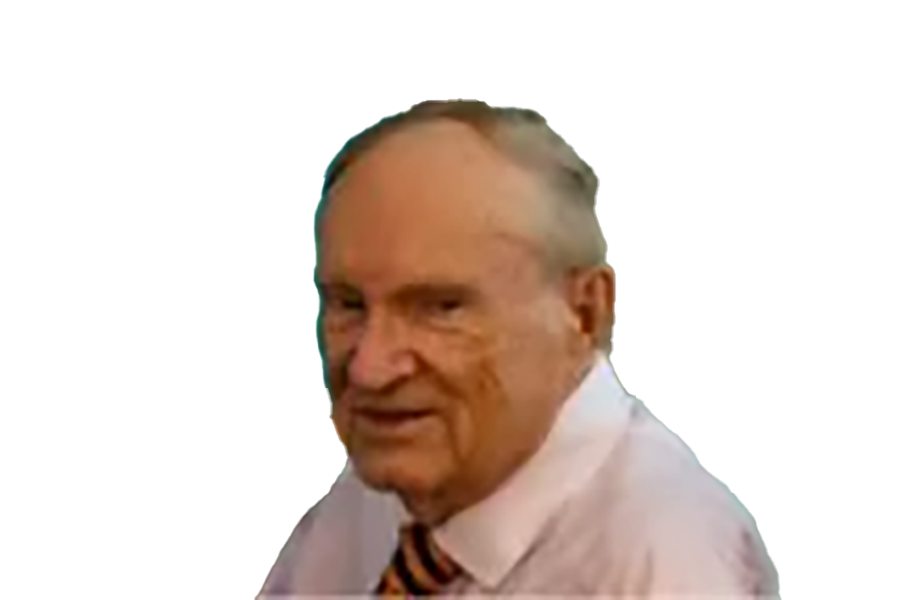
Passing of a Pioneer and Warrior
With the continuous growth of the association since its foundation in 1998, Mr. Minelli had already expanded the association’s board by several persons some years ago, planned succession for a seamless transition, and ensured the association’s operational continuity. The DIGNITAS team will continue to manage and develop the association in the spirit of its founder as a professional and combative international organization for self-determination and freedom of choice in life and at the end of life.
“Freedom, human rights, don’t come for free – they must be fought for and, once gained, defended again and again.” ~Ludwig A. Minelli, founder of the Swiss death-with-dignity organization, DIGNITAS
A life for freedom of choice, self-determination, and human rights
Ludwig A. Minelli began his career as a journalist with the Swiss newspaper “Tat” in 1956. From 1964 to 1974, he was the first correspondent of the German news magazine “Der Spiegel” in Switzerland.
Fascinated by the legal means through which the fundamental rights enshrined in the European Convention on Human Rights could be enforced beyond national borders, he started studying law in 1977, graduating in 1981. In 1977, he founded the “Swiss Society for the European Convention on Human Rights” (Schweizerische Gesellschaft für die Europäische Menschenrechtskonvention; SGEMKO), a non-profit membership association that disseminates information on the European Convention for the Protection of Human Rights and Fundamental Freedoms (ECHR).
In 1986, Minelli, then 54 years old, was admitted to the bar of attorneys. His understanding of the law was based on the conviction that the state serves the citizen, rather than the citizen the state. He was particularly concerned with upholding and enforcing human rights as enshrined in the European Convention on Human Rights. He always conducted his legal cases with an eye to the possibility of appealing to the European Court of Human Rights in Strasbourg if necessary.
A tenacious and unflinching warrior
Minelli’s sharp legal and political mind, coupled with his creativity, his investigative instinct, his talent for research, and the ability to put down seamless lines of argument on paper practically in one go, helped him to achieve numerous successes in court. He stood unwaveringly for his convictions when it came to the protection of fundamental rights and the freedom of citizens vis-à-vis the state. It was a logical consequence of this firm attitude that he campaigned for decades, both in Switzerland and internationally, for the right to self-determination until the end of life.
Until his death, Minelli was involved in dozens of court cases, sometimes as a plaintiff or defense lawyer, often in the background as a procedural advisor for others. Calmly, and in the conviction that the law was on his side, he accepted the fact that he himself now and then sat unjustly in the dock. And that those who get bitten occasionally try to bite back.
With his appeals to the Swiss Federal Supreme Court and the European Court of Human Rights in Strasbourg, Minelli has had a lasting influence on Swiss law in some areas. Andreas Gross, former (SP) National Councilor and parliamentarian in the Council of Europe, writes in the epilogue to the book Scharf beobachtet. Ein Dritteljahrhundert EMRK-Praxis und die Schweiz (“A close watch. A third of a century of ECHR practice and Switzerland”), which Minelli published in 2014: “If you are looking for a personification of a Switzerland that respects the ECHR, you will find it at Zurich-Forch in the shape of Ludwig A. Minelli.”
Minelli was also the one who helped the democratic instrument of the parliamentary initiative gain new prominence in Switzerland. For more than a hundred years, it was rarely used, even though it had been on a par with the cantonal initiative since the beginnings of the federal state.
Pioneering work in suicide attempt prevention
The fact that Minelli founded the membership association “DIGNITAS – To live with dignity – To die with dignity” on 17 May 1998 was the result of a disagreement at the general assembly of EXIT (German-speaking Switzerland). At the time, Minelli was legal advisor to EXIT’s managing director, Peter Holenstein. Holenstein proposed to add the prevention of suicide attempts to the association’s tasks, beyond physician-supported accompanied suicide (voluntary assisted dying).
When the proposal failed and Holenstein was voted out of office, Minelli, together with a group of like-minded people, immediately founded DIGNITAS. At that time, he and his fellow compatriots would never have thought that this association was about to become an internationally active organization with over 10,000 members and several dozen team members.
Suicide attempt prevention is still a pillar of the DIGNITAS philosophy. Minelli recognized early on that as a matter of principle, people with a history of suffering also want to continue living if they can find a quality of life acceptable to them personally. Trying to talk someone out of suicide is not a suitable prevention method. Rather, the approach should be taking a person in a seemingly hopeless situation seriously, meeting them at eye level, and showing them all possible options to alleviate their suffering – including the possibility of ending their life with professional support, safely and in a self-determined way in a setting that he or she personally deems dignified. It is up to the individual to decide which option to choose.
Practice proves Minelli right. Only a small percentage of the seriously ill people who turn to DIGNITAS apply for voluntary assisted dying, and an even smaller percentage of them actually go down this path in the end. Just knowing that they have this option gives them relief and the courage to go on living. This can prevent lonely and desperate suicide attempts, which in most cases fail and have serious consequences for the person concerned and their loved ones, as well as for third parties.
International legal successes for assisted dying
Minelli and DIGNITAS have always been committed to ensuring that people living in other countries than Switzerland also have access to all the possibilities and necessary basis for decision-making to be able to exercise their rights.
A milestone was the judgment of the European Court of Human Rights (ECtHR) on 20 January 2011 in the case of Haas v. Switzerland, initiated by DIGNITAS, in which the court confirmed the right of a person capable of judgment to decide on the manner and the time of their own end of life.
In 2020, Minelli achieved two further important successes in Germany and Austria:
- On 26 February 2020, the German Federal Constitutional Court declared unconstitutional and void controversial Section 217 of the German Criminal Code (StGB), which effectively made professional assistance in suicide impossible in Germany. Minelli, together with DIGNITAS in Switzerland and the German sister association “DIGNITAS – Menschenwürdig leben – Menschenwürdig sterben (Sektion Deutschland) e.v.” in Hanover, which he co-founded in 2005, had been among the plaintiffs.
- Furthermore, on 11 December 2020, the blanket prohibition of assisted suicide in the Austrian Criminal Code was annulled by the Austrian Constitutional Court in proceedings financed by DIGNITAS, led by a Viennese attorney, and initiated and supported by Minelli.
Minelli acted in an advisory capacity in numerous court cases as well as in political proceedings, often from behind the scenes. He rarely spoke publicly about all his successes. Instead, right up to the end of his life, he continued to search for further ways to help people to exercise their right to freedom of choice and self-determination in their “final matters” – and he often found them.
About DIGNITAS:
DIGNITAS – To live with dignity – To die with dignity was founded in May 1998 with the aim, through international legal and political work, to make the proven Swiss model of freedom of choice, self-determination and personal responsibility in life and at life’s end also accessible to individuals abroad. DIGNITAS’ advisory concept – combining palliative care, suicide attempt prevention, advance directives/decisions and assisted dying – offers a basis for good decision-making to shape life until the end.
Through litigation, Dignitas obtained a judgment of the European Court of Human Rights in 2011 acknowledging the right/freedom of a competent individual to decide on the manner and time of his or her own end in life and confirming this to be protected by Article 8 of the European Convention on Human Rights.
Marc D Malamud
Transitioning Doula